


Startup Things: Vol 4 | Running Up That Hill
The flashy neon of the Starcourt Mall (Volume 3) has burned down. The "Summer of Love" for startups—the era of easy VC money and endless optimism—is over.
Welcome to Season 4. The vibe has shifted dramatically. The bright colors are gone, replaced by the muted, cold tones of a Russian winter or a California suburb that feels strangely isolating. The tight-knit "party" that survived the previous seasons is fractured, separated by distance and trauma.
Welcome to the "Bear Market" phase of your startup journey.
*You aren't fighting Demodogs in a lab anymore. *You aren't fighting a giant meat-monster at the mall. The threat has moved inside your own head.
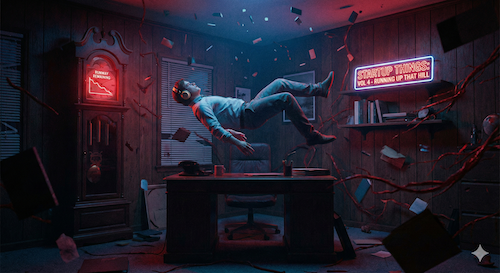
In Stranger Things 4, the villain, Vecna, doesn't just attack physically. He hunts psychologically. He targets those carrying hidden trauma and guilt. He isolates them, paralyzes them in a trance, and forces them to relive their worst failures until it destroys them. And always, just before the end, they hear the chiming of a grandfather clock.
For founders navigating a downturn, running low on cash, and exhausted from years of fighting, this is the most dangerous phase yet. It’s time to talk about the trance of burnout.
I. The Grandfather Clock (Runway Anxiety)
Throughout Season 4, the terrifying motif is the sound of a grandfather clock chiming. When a character sees that clock, they know their time is almost up.
Every founder knows this sound. It’s the sound of your monthly burn rate eating into your remaining cash.
In the neon-soaked days of Volume 3, runway wasn't a major concern; another funding round was always just around the corner. But now, the market has turned. VCs are ghosting. Customers are cutting budgets.
The clock is ticking louder every day.
This constant, background anxiety changes how you operate. Instead of playing to win, you start playing not to lose. You stop taking the creative risks that made you successful (your "Eleven" powers) and start obsessing over minor optimizations to buy another week of life. The clock becomes deafening, drowning out your ability to think clearly.
II. The Curse of Vecna (The Paralysis of Isolation)
How does Vecna kill his victims? He isolates them. He lifts them into the air in a trance, and while their friends scream at their physical bodies, their minds are trapped in the Upside Down, reliving their past mistakes.
This is the perfect metaphor for late-stage founder burnout.
When things are going badly, the natural instinct is to isolate. You don't want to tell your team how bad the runway really is. You don't want to tell your investors you’re struggling mentally. You sit alone in your home office (the fractured "California" plotline), staring at Slack.
In that isolation, Vecna attacks. Imposter syndrome takes over. You start replaying every bad hire, every missed product deadline, every botched sales call. You become paralyzed by the weight of your own history.
The Danger: A paralyzed founder cannot make decisions. And in a bear market, indecision is death. You are floating in the air, while your company needs you on the ground, leading.
III. The "Satanic Panic" (External Noise)
While the real threat is happening in the Upside Down, the town of Hawkins is distracted by a "Satanic Panic," blaming the innocent "Hellfire Club" (the D&D players) for the town's problems.
When the tech market turns sour, the media and public sentiment often turn against founders. Suddenly, you aren't innovators; you're villains. The narrative shifts. The outside world tells you that your industry is a scam, your valuation was fake, and your efforts were wasted.
If you listen to this external noise, it fuels Vecna’s curse. You start believing that you are the villain of your own story. You have to remember that the "townspeople" don't understand the game you are playing. You have to trust your own Hellfire Club—your co-founders and closest peers who actually understand the reality of the situation.
IV. Finding Your "Music" (Breaking the Trance)
The most iconic moment of Season 4 is Max escaping Vecna. She is trapped in his mind lair, about to be consumed. But in the real world, her friends put her headphones on and blast her favorite song: Kate Bush’s "Running Up That Hill."
The music opens a portal. It reminds Max of the good memories, her friends, and her will to live. It snaps her out of the trance and gives her the strength to sprint away from the monster back to reality.
When you are deep in founder burnout, KPIs and spreadsheets will not save you. They are just noise.
You need your music. You need a "totem."
Your totem is the core reason you started this company in the first place. It’s the mission that goes beyond the current valuation.
Is it the customer whose life you fundamentally changed in Volume 1?
Is it the vision of the future you are trying to build?
Is it the team member who quit a safe job to follow your lead?
When you feel the paralysis setting in, you have to put on the headphones. Reconnect with that foundational "why." Read your best customer testimonials. Look at your original pitch deck. Remember what it felt like before the cynicism set in.
That mission is the only thing strong enough to break the trance and get your feet moving again.
V. Running Up That Hill
Max escapes, but she isn't "healed." She's battered, terrified, and exhausted. But she is alive. And she is running.
Surviving Volume 4 isn't about thriving; it's about enduring. It’s about grit. It’s about accepting that the hill is steep, the clock is ticking, and you are tired. But you have to keep running toward the portal of reality—executing, making hard choices, and refusing to let the psychological monsters win.
You’ve broken the trance. You’re back in the real world. The clock is still ticking, but now you’re moving.
Coming Up in Vol 5...
You’ve survived the hunt for signal, the shadow monster of growth, the Starcourt siege of competition, and the psychological torture of the ticking clock.
You are battered and bruised, but you are still standing. Hawkins is cracking apart. TheUpside Down is bleeding into the real world. It’s time for the endgame.
In the final volume of Startup Things, we look at "The Exit." How do you close the gate? How do you navigate the final, high-stakes battle of an acquisition or IPO, and ensure that what you built leaves a legacy rather than just ash?
31st December 2025